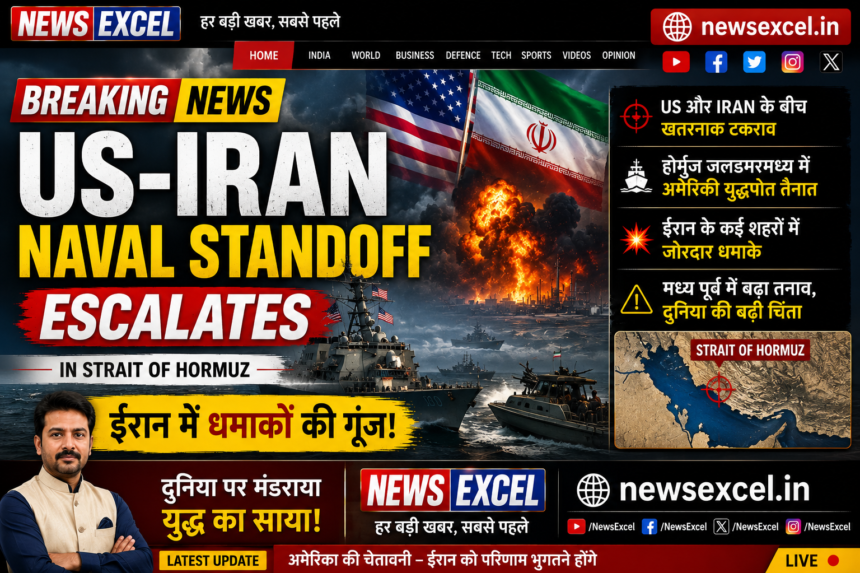
Tensions in the Middle East surged dramatically after naval forces from the United States and Iran reportedly confronted each other in the strategically critical Strait of Hormuz, triggering fears of a wider regional conflict despite ongoing diplomatic efforts and claims of an unofficial ceasefire.
According to statements released by both sides, military engagements involving missiles, drones, and naval defense systems took place near one of the world’s most important oil transit corridors. The situation has rapidly intensified global concerns over energy security, maritime trade routes, and the possibility of direct military escalation between Washington and Tehran.
Trump Claims Iranian Missiles Were Intercepted
U.S. President Donald Trump stated that Iranian missiles and drones targeting American warships were intercepted before impact. Trump claimed that American naval forces successfully neutralized the threat and maintained operational control in the region.
The United States has not confirmed major damage to any naval assets. American defense officials described the response as defensive and proportionate, while stressing that U.S. forces remain prepared for any further aggression.
Iran Claims US Fleet Suffered Damage
Iranian state-linked media presented a sharply different version of events. Reports from Iranian outlets claimed that American vessels suffered heavy operational damage and were forced to reposition away from Iranian-controlled waters.
Iranian military commentators described the confrontation as a strategic response to Western pressure in the Persian Gulf. However, independent verification of either side’s battlefield claims remains unavailable.
Explosions Reported Near Strategic Iranian Locations
The maritime confrontation coincided with reports of explosions across several Iranian regions. Iran’s semi-official Fars News Agency reported blast sounds near Bandar Abbas, Qeshm Island, and areas surrounding Tehran.
These locations are strategically significant, particularly Bandar Abbas, which hosts major Iranian naval infrastructure near the Strait of Hormuz. It remains unclear whether the explosions were linked directly to military strikes, air-defense activity, or internal security operations.
Why the Strait of Hormuz Matters
The Strait of Hormuz is one of the most sensitive maritime chokepoints in the world. A major share of global oil supply passes through this narrow route connecting the Persian Gulf to international markets.
Any disruption in this region can immediately affect global oil prices, shipping routes, energy-importing countries, and financial markets worldwide. Analysts warn that even a limited naval clash in Hormuz could trigger sharp volatility in crude oil markets.
Global Reactions Intensify
Several governments and international organizations are closely monitoring the situation. Diplomatic sources indicate that emergency communications between regional allies and global powers are underway to prevent further escalation.
Security experts believe the current standoff represents one of the most dangerous moments in U.S.-Iran relations in recent years. While neither side has formally declared war, the scale of military activity suggests that tensions remain dangerously high.
Regional Stability Under Threat
The confrontation adds to an already volatile security environment across the Middle East. Ongoing conflicts, proxy tensions, and geopolitical rivalries have created a fragile balance in the region.
Military observers warn that if attacks continue around the Strait of Hormuz, global shipping companies may begin rerouting vessels, which could disrupt energy exports and international trade flows.
What Happens Next?
At present, both Washington and Tehran continue to exchange accusations while avoiding formal declarations of wider military operations. However, repeated confrontations at sea significantly increase the risk of accidental escalation.
With explosions reported inside Iran and military forces remaining on high alert in the Gulf, the international community is now focused on whether diplomacy can prevent the crisis from spiraling into a broader conflict.